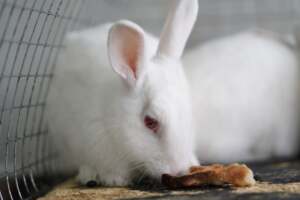
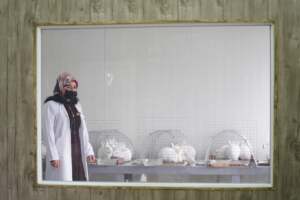
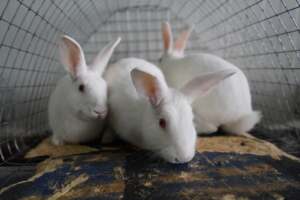
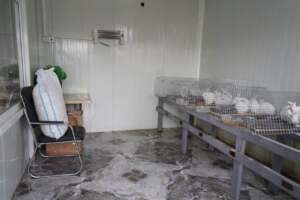
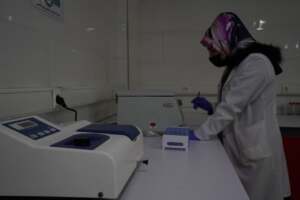
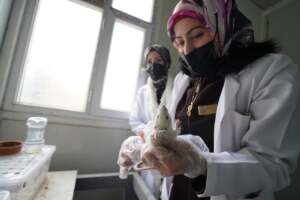
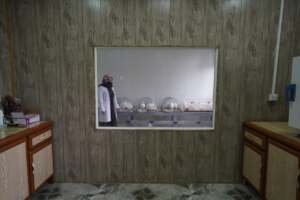
Researchers have traditionally conducted their experiments in discovering treatments, medicines, and vaccines on animals before transitioning these findings to humans. Specific types of these animals are chosen due to their anatomical similarities to humans, allowing researchers to assess the potential for transferring findings to humans by studying the effects on these animals and observing their responses. This also aids in the practical components of anatomy and physiology. To facilitate this, institutions establish special shelters or homes where laboratory animals are kept, providing an environment similar to their natural habitat. These animals are typically injected with treatments, and their conditions are studied in comparison to those of non-inoculated counterparts. In order to enhance the research efforts of the professors at Al-Noor University and provide them with a suitable opportunity to study animal behavior in a practical setting, the university has established an animal house connected to its central laboratory. It aims to equip this facility with the required animals, furniture, materials, chemicals, and equipment, thus providing researchers the opportunity to conduct field experiments and achieve innovative research. Additionally, this initiative offers students the chance to correlate their theoretical studies with practical experience through the presence of real, live animals. They can examine these animals to study their behavior, administer treatments to assess their responses, and gain insights into their anatomy, dysfunction areas, and disease processes through dissection. Adjacent laboratories provide the necessary materials to support their practical studies. Therefore, the animal house at Al-Noor University serves as a vital resource for enriching teaching processes, enhancing them, and equipping our students with early practical experience.