Alnoor University Explores with the University of Nottingham the Development of Medical and Pharmacy Programs and the Enhancement of Research Collaboration
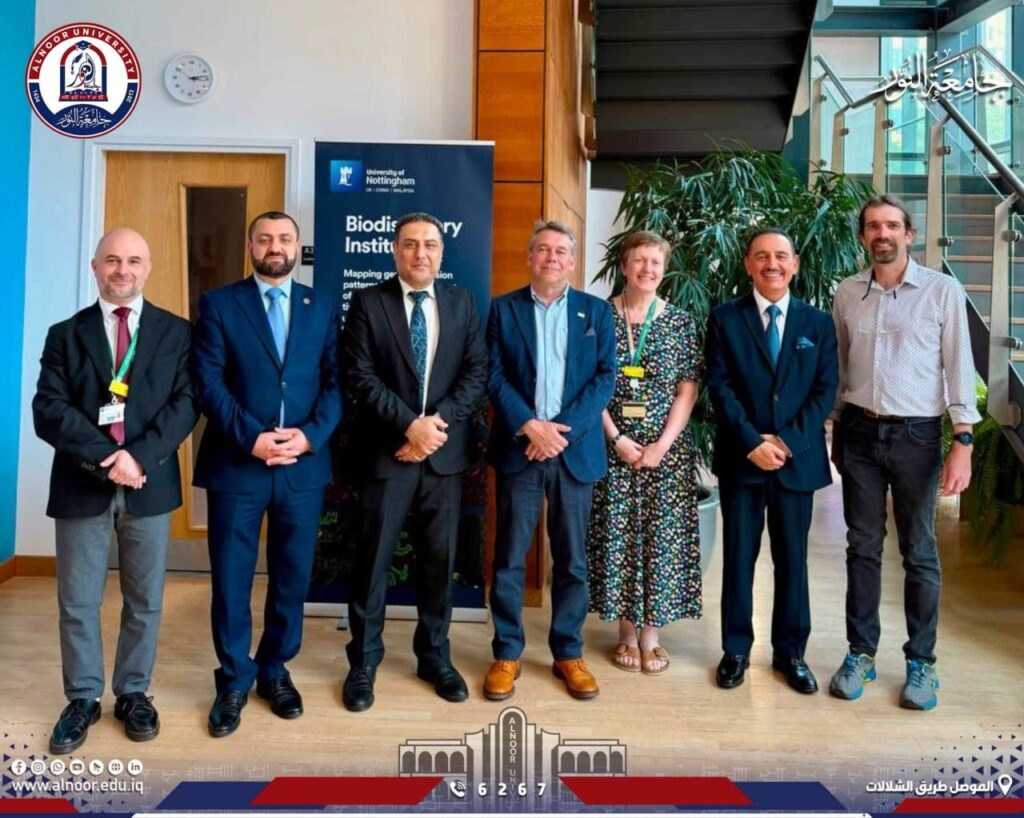
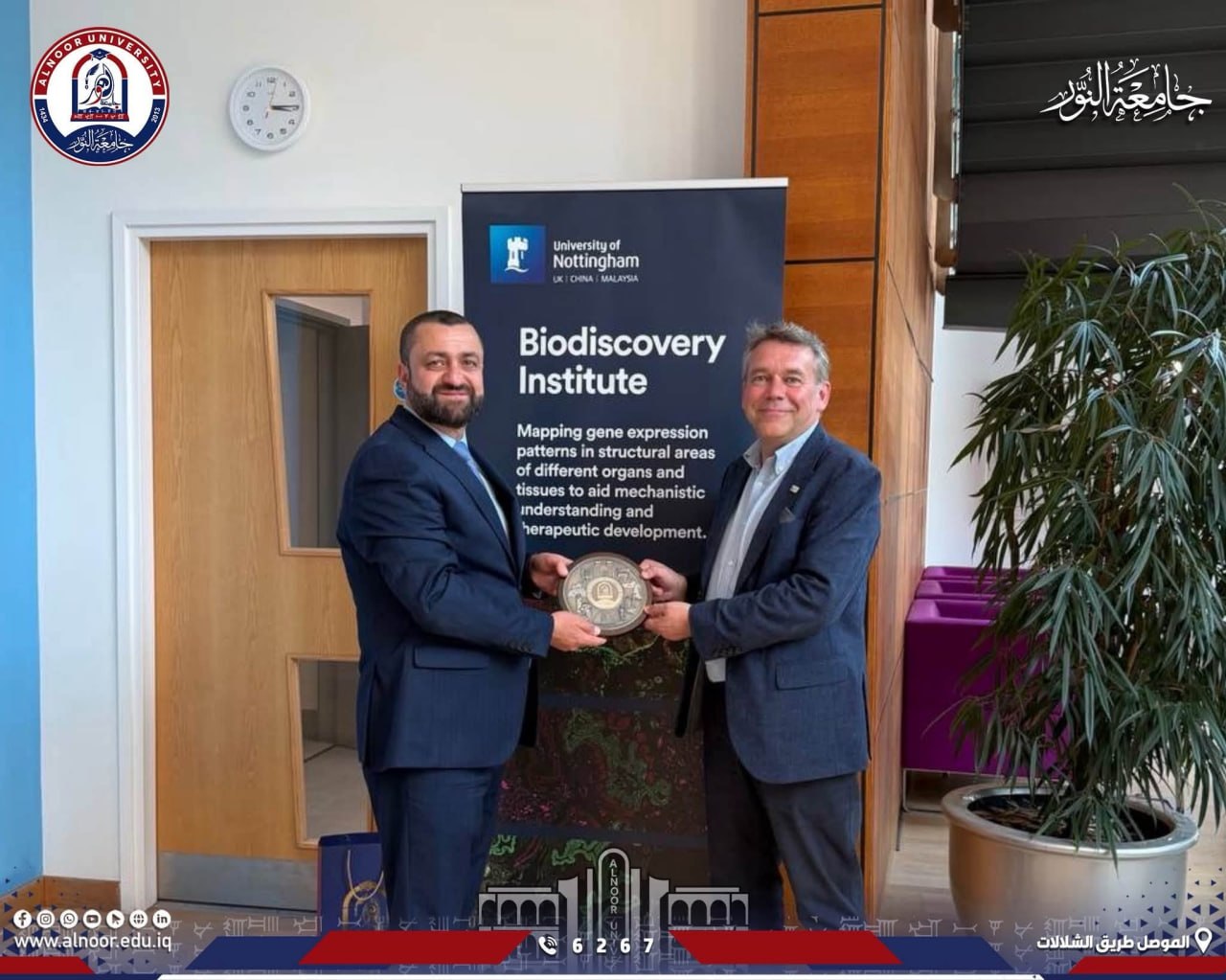
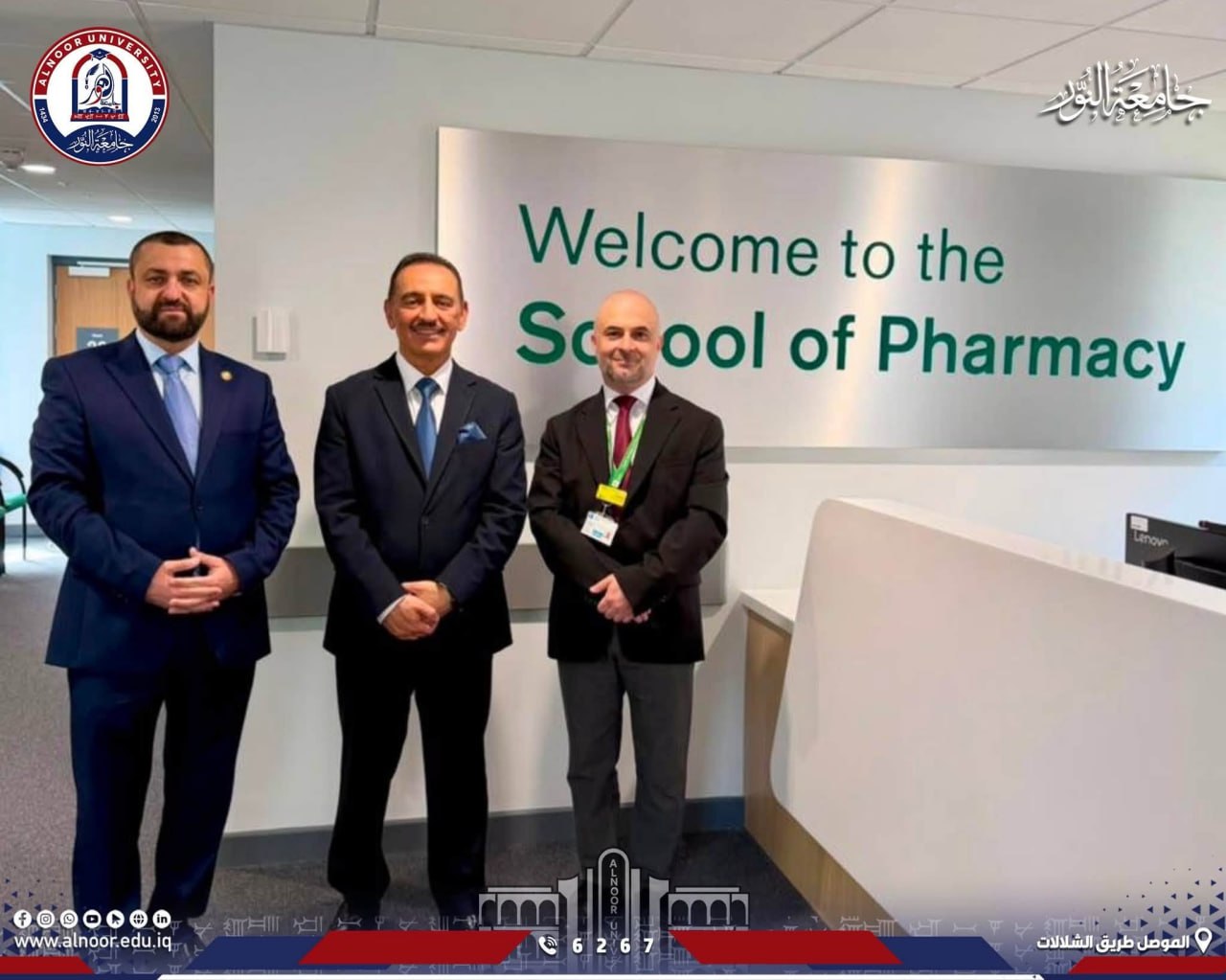
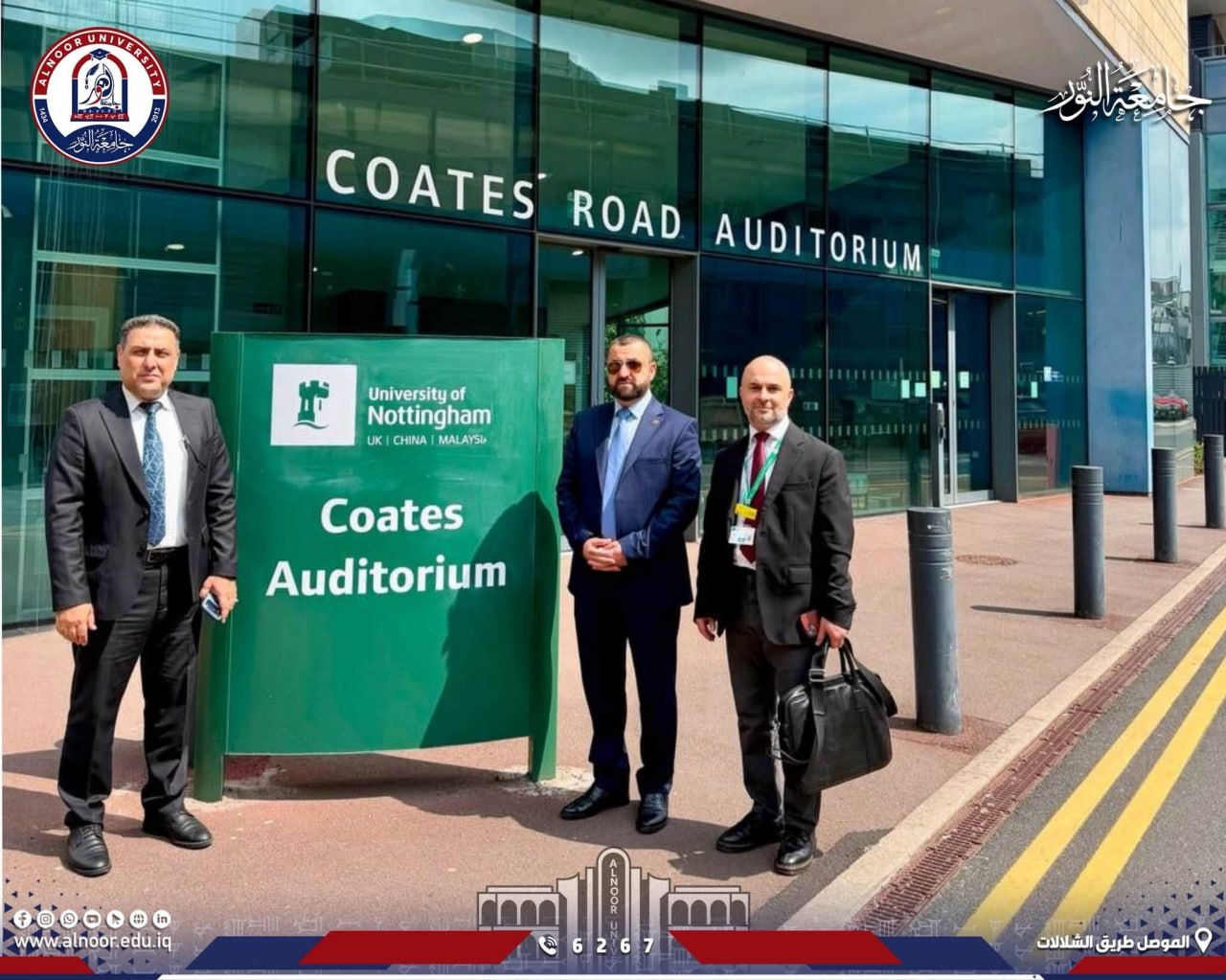
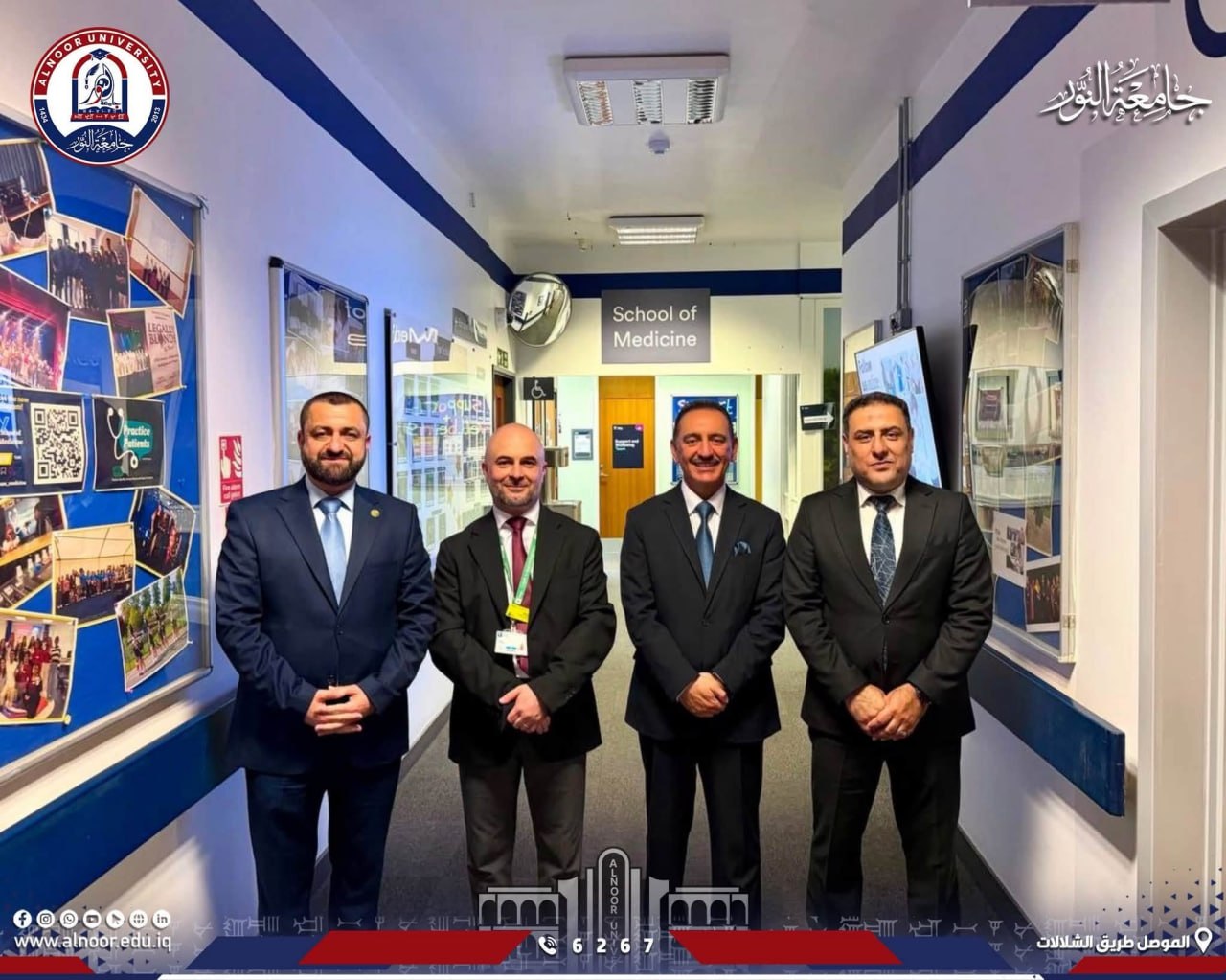
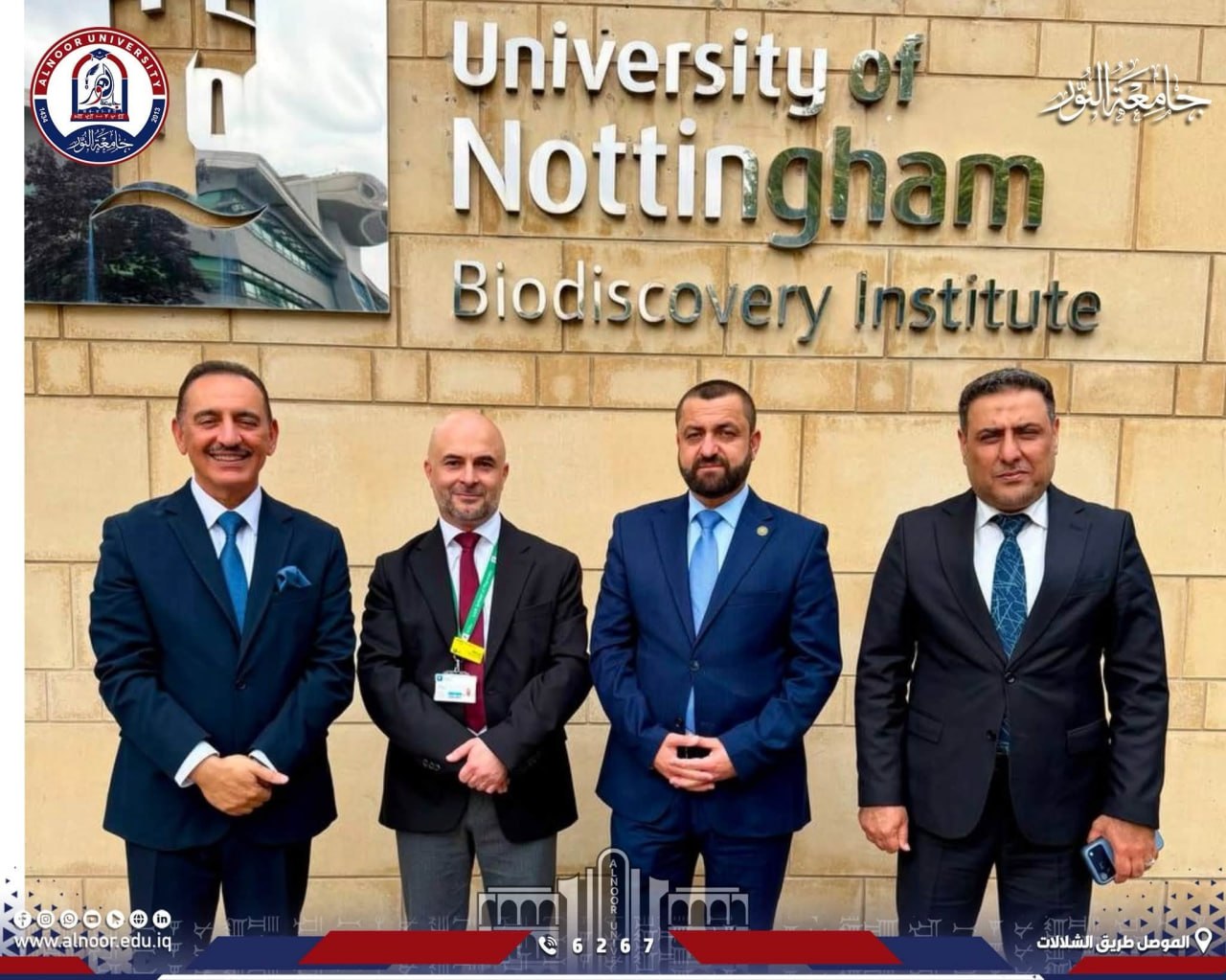
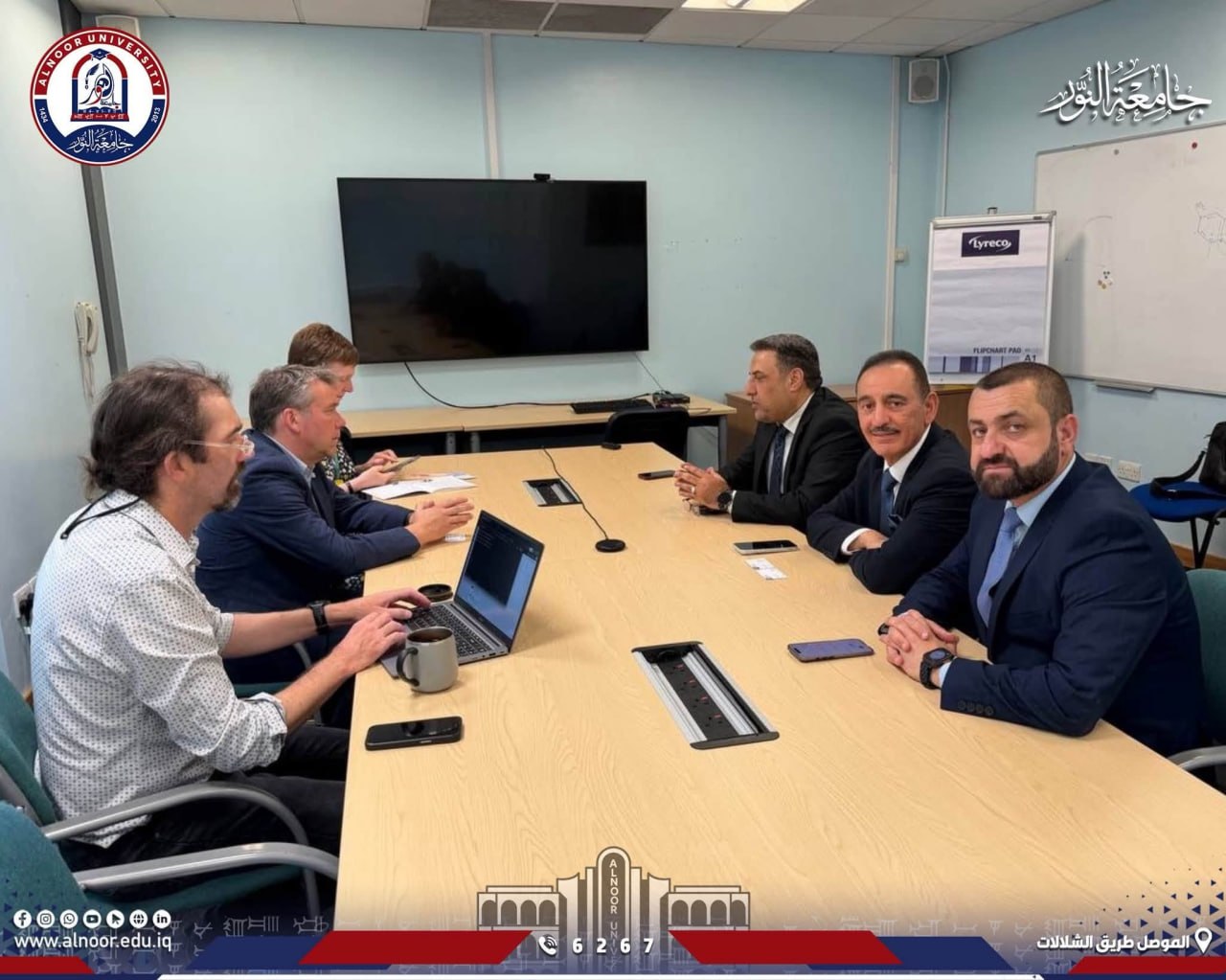
As part of its commitment to internationalizing its academic programs and strengthening partnerships with leading British universities, a delegation from Alnoor University paid an academic visit to the University of Nottingham, where it held an extensive meeting under the patronage and in the presence of the Iraqi Cultural Attaché to the United Kingdom, Professor Qusay Alahmadi. The meeting explored prospects for academic and scientific cooperation between the two institutions, with particular emphasis on collaboration in the fields of medicine and pharmacy.
The meeting was also attended by Professor Othman Ahmed Othman, a native of Mosul, an academic at the University of Nottingham, and the academic lead for the University's School of Pharmacy. Discussions focused on the University's experience in designing and developing pharmacy programs, curriculum development, and exploring ways to benefit from advanced academic expertise to further enhance pharmaceutical education.
The University of Nottingham enjoys a distinguished global reputation in the fields of pharmacy and pharmaceutical sciences. Its Pharmacy program is recognized as one of the leading programs in the United Kingdom and worldwide. According to the QS World University Rankings by Subject 2026, the University ranked 8th globally and 2nd in the United Kingdom for Pharmacy and Pharmacology.
The meeting featured in-depth discussions on the curricula adopted in the fields of medicine and pharmacy, as well as mechanisms for their development. The discussions explored ways to benefit from the University of Nottingham's experience in designing and modernizing academic programs to keep pace with the rapid advancements in medical and pharmaceutical education. Particular emphasis was placed on clinical education, practical training, integrating curricula with professional practice, and strengthening their connection to scientific research.
The meeting also discussed the University of Nottingham's experience in clinical medical education and its integration of academic instruction with teaching and research hospitals. The discussions explored ways to benefit from this experience in developing medical programs, strengthening the role of the teaching hospital in clinical training, and advancing medical scientific research.
The two sides also discussed opportunities for cooperation in medical and pharmaceutical research, including the development of joint research projects and the exchange of academic and research expertise between faculty members and researchers. They also explored collaboration in postgraduate programs, particularly research-oriented programs in pharmacy and pharmaceutical sciences.
The Alnoor University delegation affirmed that this visit forms part of the university's strategy to strengthen its engagement with leading UK universities and benefit from their expertise in developing medical and pharmacy curricula and academic programs. The university also seeks to establish an integrated educational system that combines academic instruction, clinical training, scientific research, and postgraduate studies, thereby enhancing the quality of education and improving the university's academic outcomes.
The delegation also expressed its appreciation for the vital role played by the Iraqi Cultural Attaché in the United Kingdom, represented by Professor Dr. Qusai Alahmadi, in supporting Iraqi universities and facilitating channels of communication and cooperation with British universities and academic institutions, thereby strengthening the international presence of Iraqi higher education institutions.