Alnoor University and Baytna Foundation Present at the British Museum Through Their Heritage Preservation Initiatives
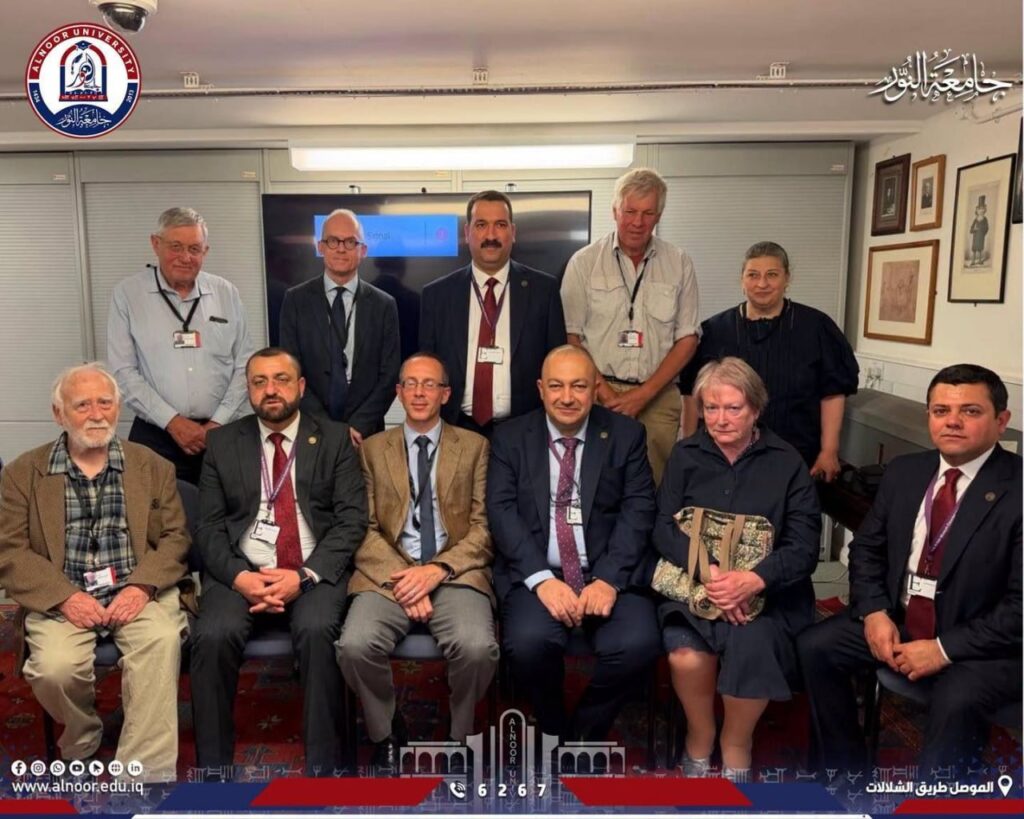
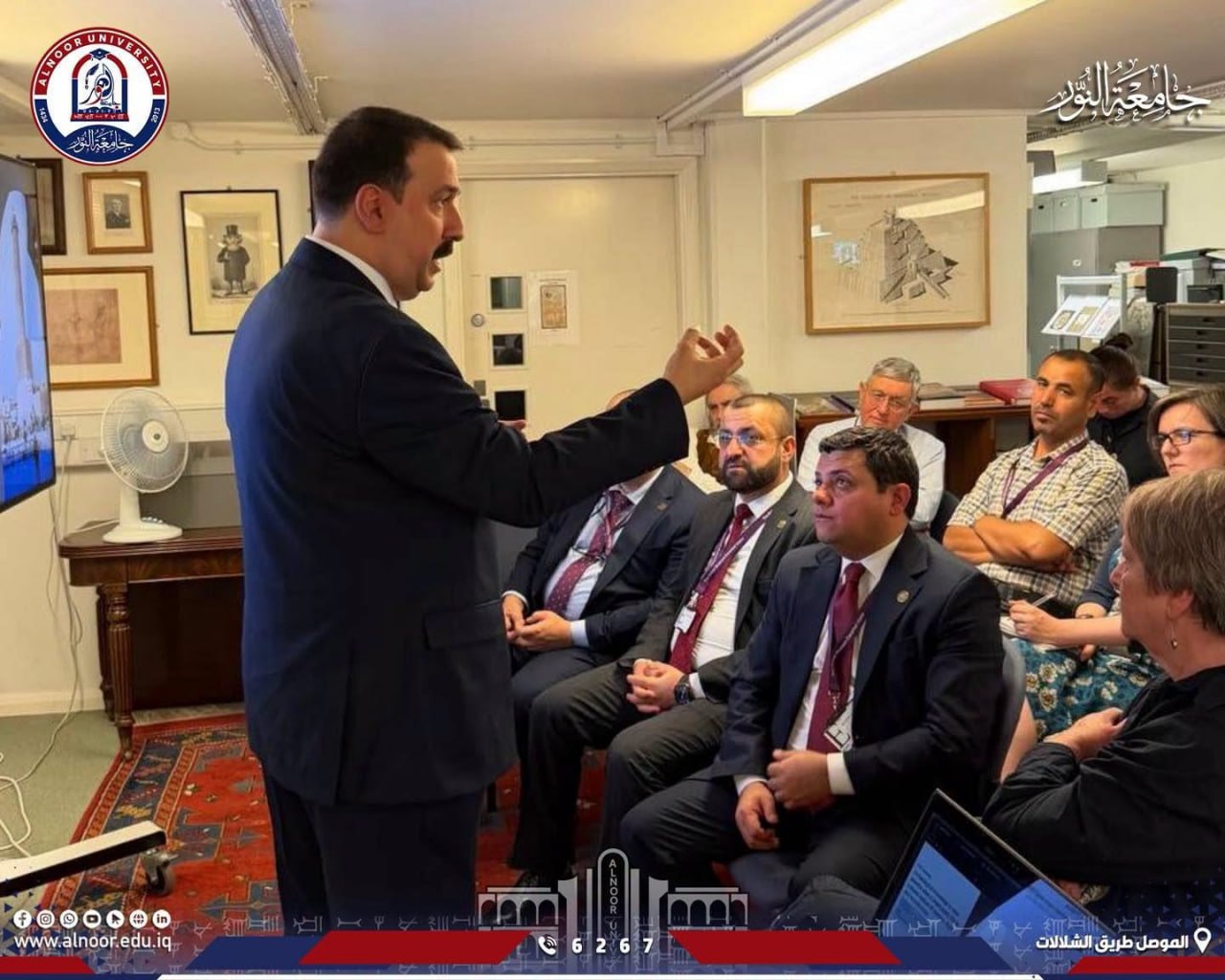
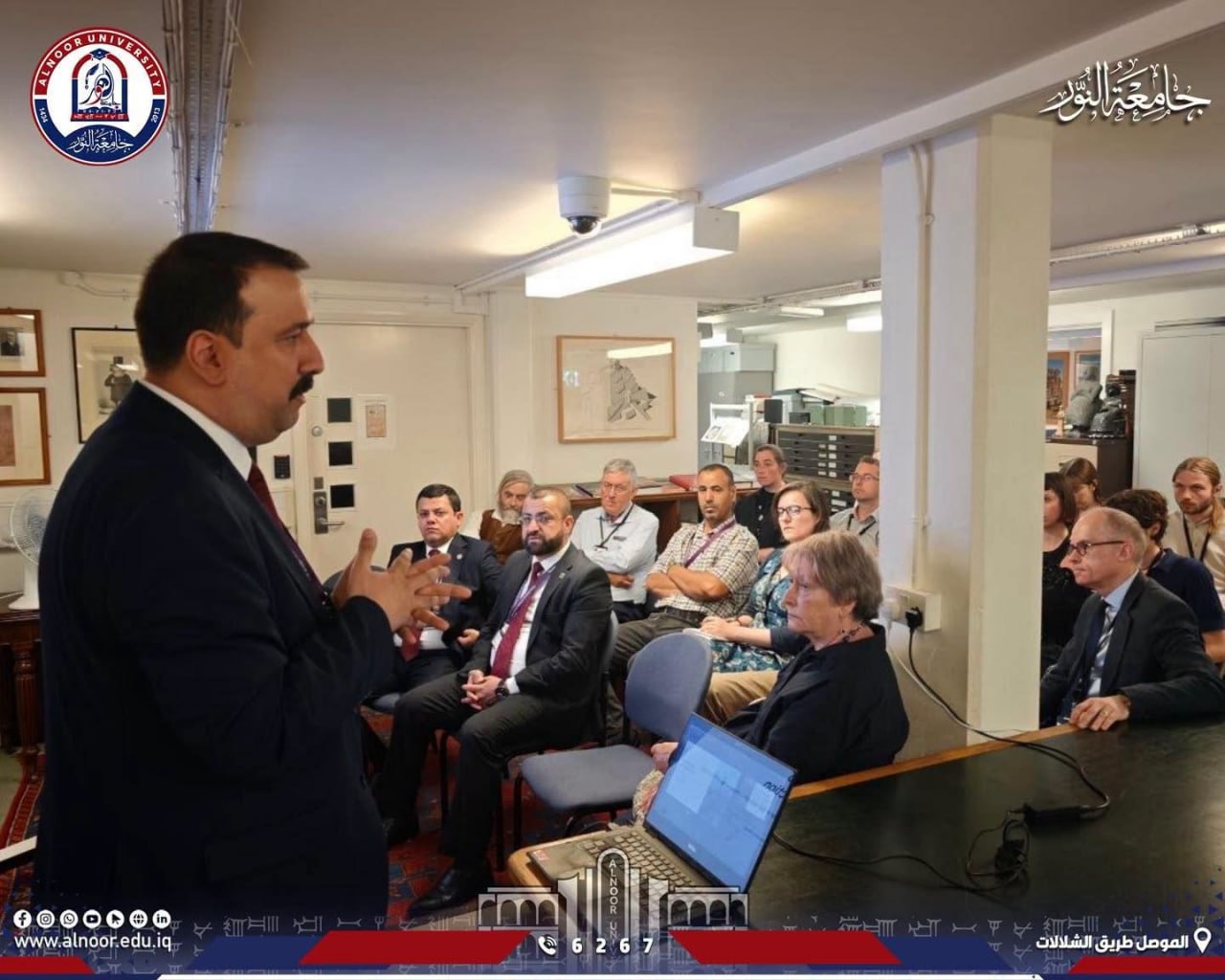
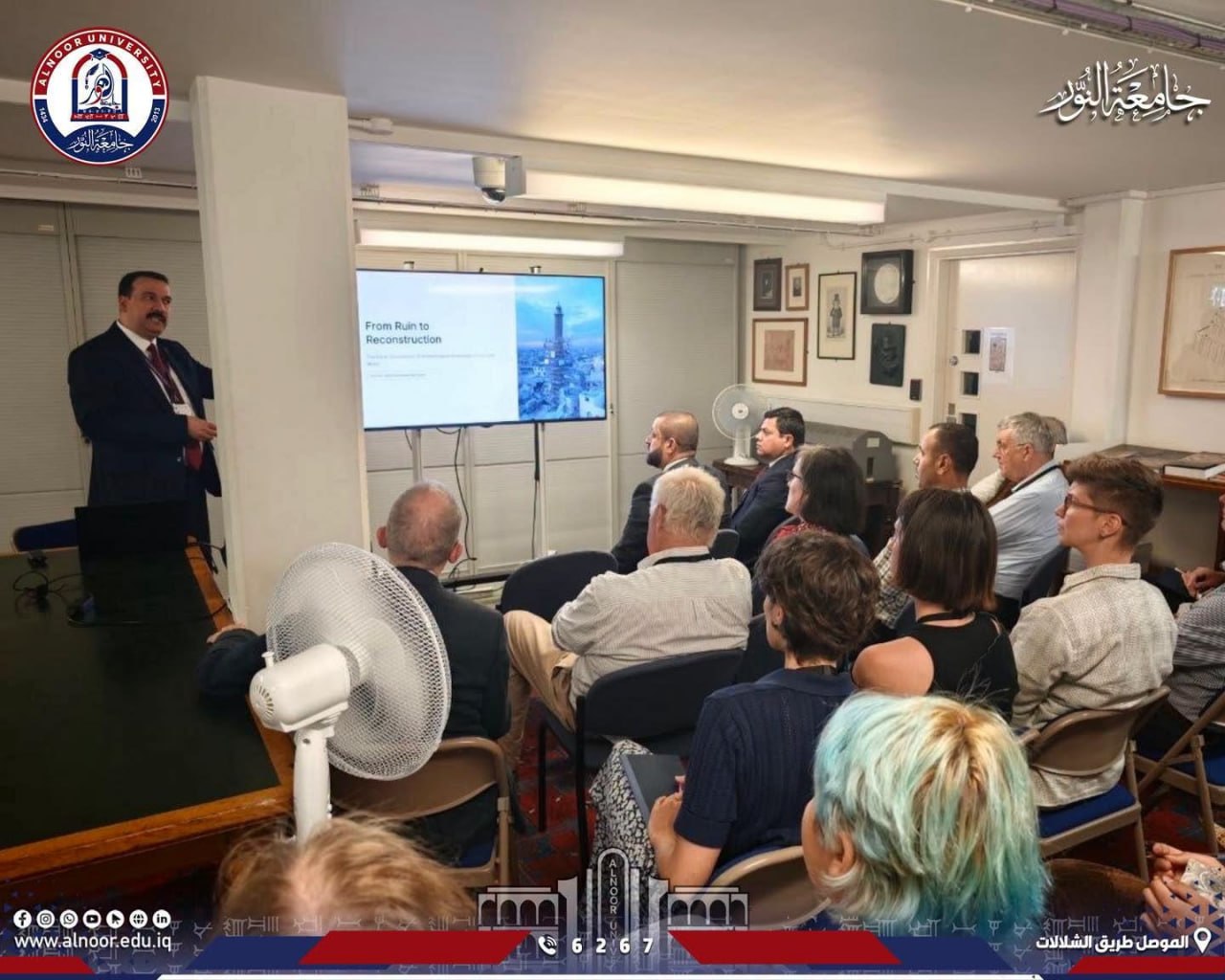
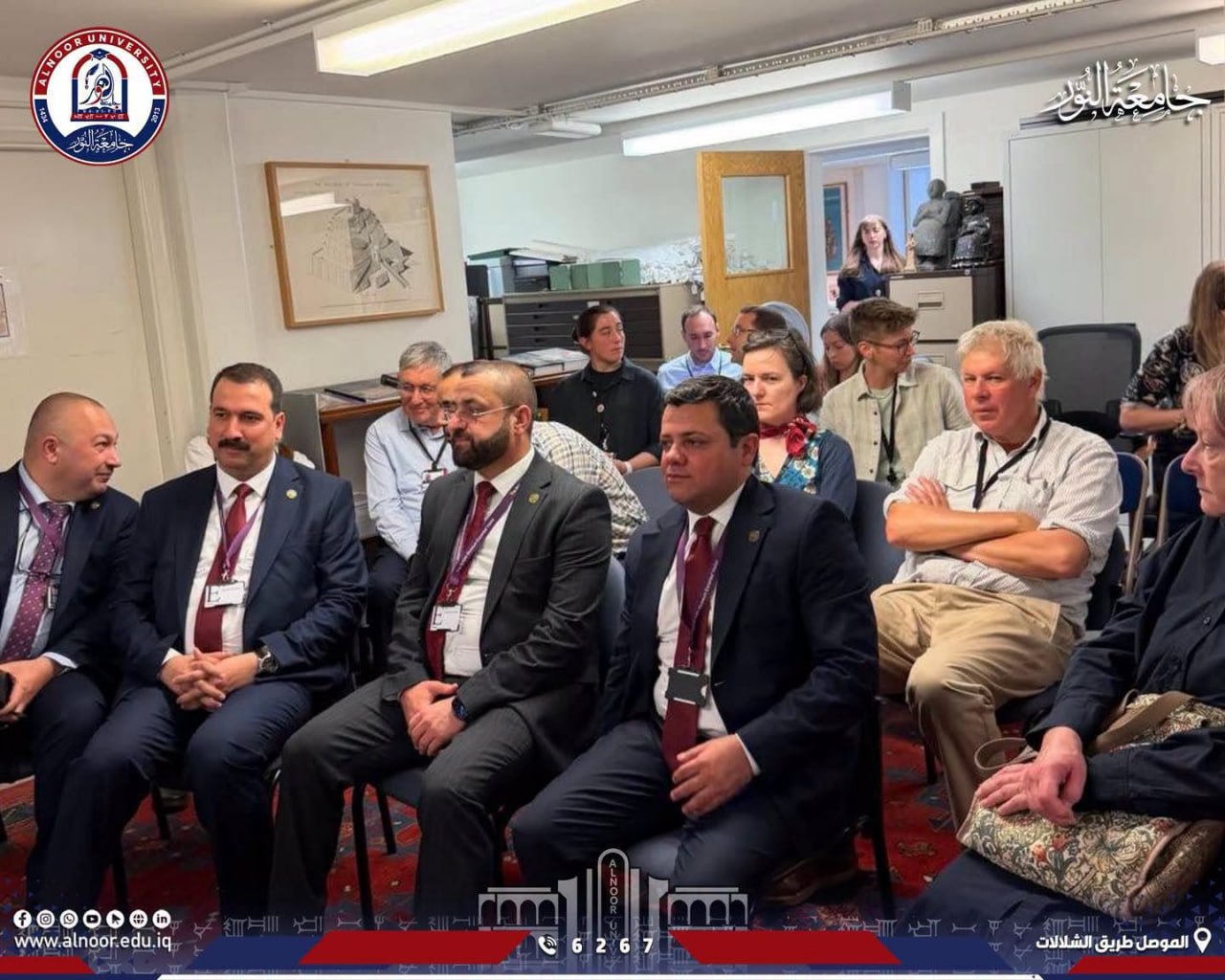
On the sidelines of Alnoor University's delegation visit to The British Museum in London, and as a continuation of the meetings held during the visit and the interest shown by the museum's officials in the university's experience in preserving cultural heritage and historical legacy, Professor Dr. Ismail Abdulwahab, Assistant President of Alnoor University for Scientific Affairs, delivered a lecture on the following day. During the lecture, he highlighted the university's most prominent activities, initiatives, and achievements in the fields of heritage preservation, cultural legacy documentation, and safeguarding Iraq's rich civilizational identity.
The lecture also highlighted Alnoor University's role in supporting heritage preservation efforts in Nineveh Governorate, particularly the cultural legacy of the city of Mosul and other areas across the governorate. It showcased the university's scientific and cultural initiatives aimed at raising awareness of the importance of protecting historical identity and safeguarding the region's cultural memory for future generations.
The Assistant to the President for Scientific Affairs also highlighted the experience of Baytuna Foundation for Culture, Arts, and Heritage, describing it as the cultural arm of Alnoor University. He reviewed the foundation's activities, initiatives, and projects aimed at documenting, preserving, and revitalizing the heritage of Mosul and Nineveh. He also emphasized its role in supporting cultural, artistic, and heritage events while linking academic work with community efforts dedicated to safeguarding cultural heritage.
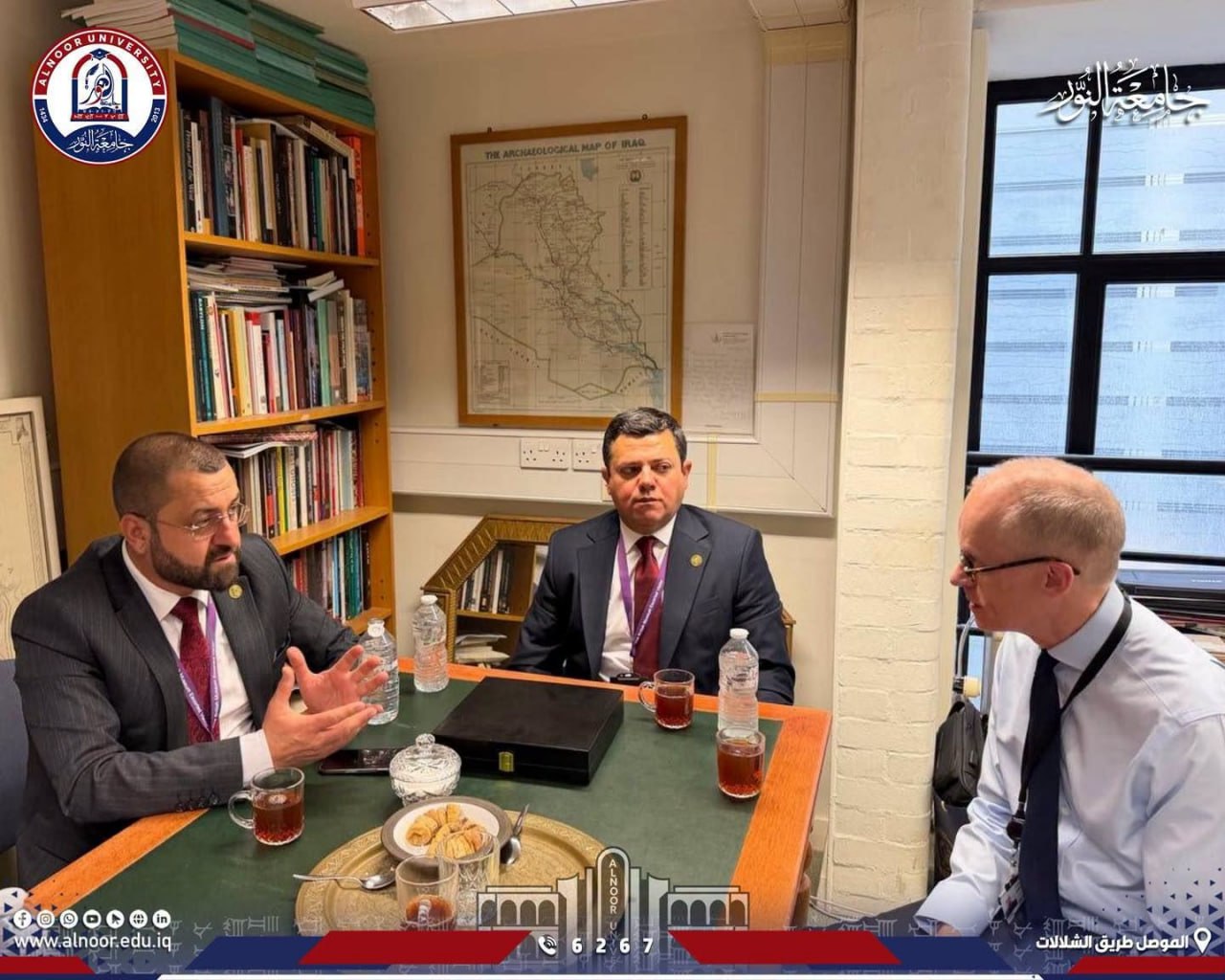
The experience of Alnoor University and the Baytuna Foundation also attracted considerable interest during the meeting, particularly in light of the historical and cultural significance of Nineveh and Mosul, and the rich Assyrian, Islamic, and Christian heritage they embrace, along with their diverse cultural components that constitute an important part of the memory of Iraq and of humanity.
This lecture follows the Alnoor University delegation's visit to the British Museum and forms part of the University's ongoing efforts to build partnerships with international institutions specializing in archaeology, cultural heritage, and museums. It also supports the University's Archaeological Tourism program by opening new avenues for academic and research collaboration, knowledge exchange, and the sharing of expertise in the preservation, documentation, management, and global promotion of cultural heritage.